
That Frustrating Moment When Your Garage Door Won't Stay Closed
You press the button on your remote, the garage door starts its descent, and then — just before it reaches the floor — it reverses and goes right back up. You try again. Same thing. Maybe it works on the third attempt, maybe it doesn't. Either way, you're standing in your driveway in Knightdale wondering what's going on.
This is one of the most common garage door problems we see, and the good news is that it's almost always fixable. The tricky part is figuring out why it's happening, because several different issues can cause the same symptom. Let's walk through the most likely culprits so you can understand what's going on — and know when it's time to call in a professional.
Understanding Your Garage Door's Safety System
Before we dive into causes, it helps to understand how your garage door is designed to work. Modern garage door openers are equipped with two key safety mechanisms mandated by federal law since 1993:
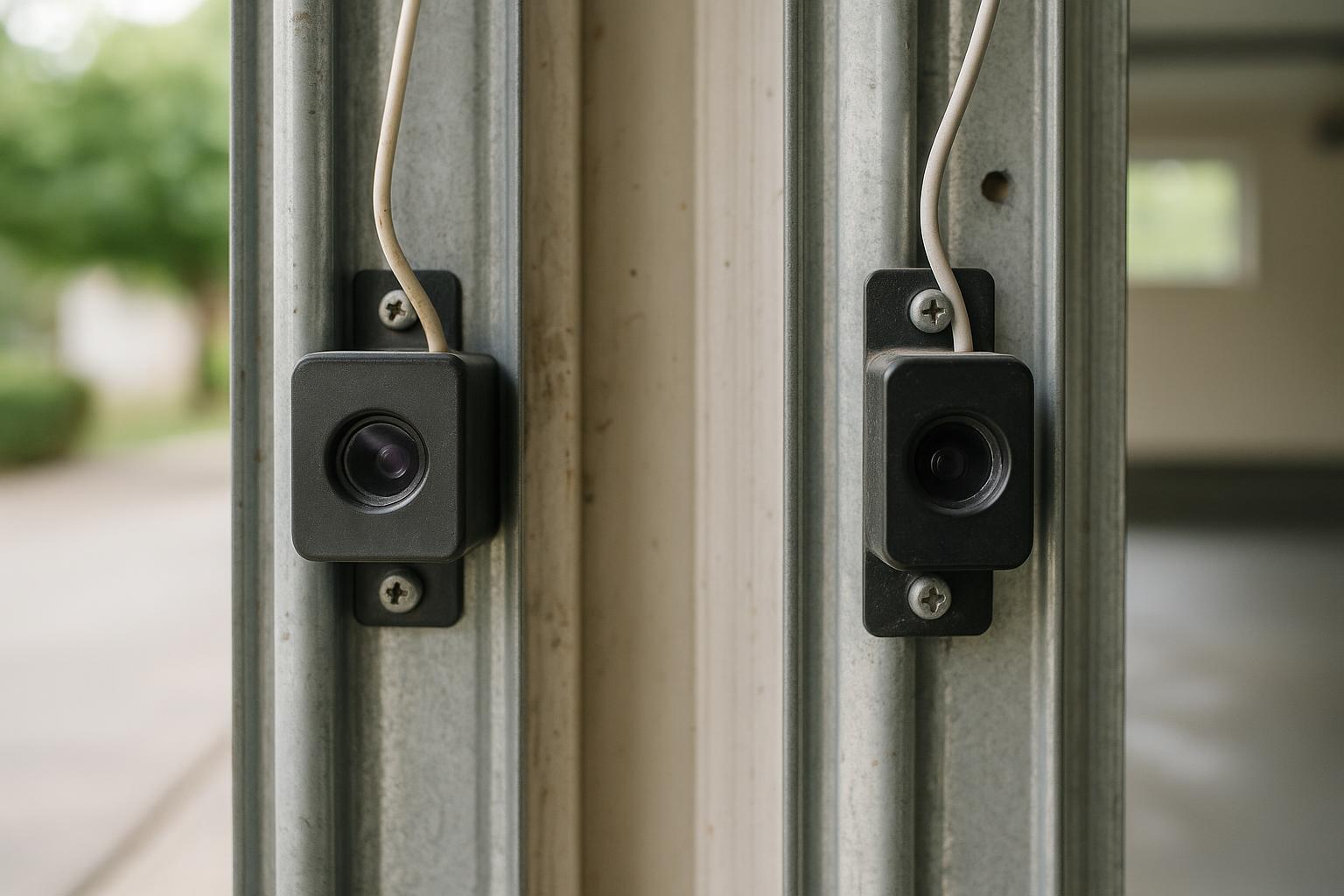
- Photo-eye sensors: Two small sensors mounted near the bottom of your garage door tracks on either side. They project an invisible beam between them. If anything breaks that beam while the door is closing, the door reverses immediately.
- Auto-reverse force settings: Your opener monitors how much resistance the door encounters while closing. If the door hits something — or if the resistance exceeds a preset limit — the opener reverses the door to prevent injury or damage.
Both of these systems are designed to protect your family, pets, and property. But when they malfunction or fall out of adjustment, they can cause your door to reverse even when nothing is actually in the way.
Common Cause #1: Misaligned Photo-Eye Sensors
This is the number one reason garage doors reverse before closing completely. The photo-eye sensors on either side of your door need to be precisely aligned to maintain their infrared beam. Over time, they can get bumped, shifted by vibration, or knocked out of alignment by a stray bicycle or trash can.
Here's how to check:
- Look at both sensors. Most models have a small LED light on each unit. Typically, one light is green and one is amber or red.
- If one or both lights are blinking rather than glowing steadily, the sensors are likely misaligned.
- Gently adjust the sensor that's blinking until the light becomes steady. Make sure both sensors are pointing directly at each other.
- Clean the sensor lenses with a soft cloth. Dust, cobwebs, and even condensation can block the beam — something we see frequently during humid Knightdale summers.
If the lights stabilize and your door closes normally, you've found your problem. If not, the issue may be with the sensor wiring or the opener itself.
Common Cause #2: Force Settings Need Adjustment
Your garage door opener has adjustable settings that control how much force it uses to close the door. If the close-force setting is too low, the opener interprets normal friction as an obstruction and reverses.
This often happens after seasonal temperature changes. In the colder months around Knightdale and the surrounding Raleigh area, lubricant on your tracks and rollers can thicken, creating more resistance than usual. The opener thinks something is blocking the door and reverses as a precaution.
Most openers have small adjustment screws or dials — usually labeled "close force" and "close limit" — on the back or side of the motor unit. Your owner's manual will show you where they are and how to make small adjustments. We recommend turning the dial only a quarter turn at a time and testing after each adjustment.
A word of caution: Setting the close force too high can be dangerous. If the door doesn't reverse when it should, it could cause injury or damage. If you're not comfortable making this adjustment, it's best to have a technician handle it.
Common Cause #3: Close-Limit Switch Is Off
The close-limit switch tells your opener where the floor is — essentially, how far the door needs to travel before it's fully closed. If this setting is off, the opener may think the door has hit an obstacle when it's actually just reaching the ground.
Signs that your close-limit switch needs adjustment include:
- The door touches the floor and immediately bounces back up
- The door closes most of the way but reverses in the last few inches
- The opener's motor continues running after the door is fully closed
Like the force settings, the limit switch is adjustable on most openers. Small, incremental adjustments are key here.
Common Cause #4: Worn or Damaged Tracks and Rollers
If your garage door tracks are bent, dented, or clogged with debris, the door can bind or stick as it travels. The opener senses this extra resistance and reverses. Similarly, worn-out rollers can create friction that triggers the auto-reverse.
Take a close look at your tracks from inside the garage. They should be smooth, clean, and free of visible damage. The rollers should spin freely and not look cracked or worn. If you notice any issues, this is typically a repair best left to professionals, since track and roller work involves the door's full weight and tension system.
Common Cause #5: Broken or Worn Springs
Your garage door springs do the heavy lifting — literally. They counterbalance the weight of the door so your opener doesn't have to work as hard. When a spring is weakening or broken, the door becomes significantly heavier, and the opener may not have enough power to close it properly. The result? The door reverses.
If you hear a loud bang from your garage, notice a gap in one of the springs above your door, or the door feels extremely heavy when you try to lift it manually, you likely have a spring issue. Spring replacement is dangerous and should always be performed by a trained technician. The springs are under extreme tension and can cause serious injury if handled improperly.
When to Call a Professional
Some of these fixes — cleaning sensors, minor alignment adjustments — are reasonable for a handy homeowner to tackle. But if you've gone through the basics and your door is still reversing, or if the problem involves springs, tracks, or opener internals, it's time to call in help.
At Knightdale Garage Door, we diagnose and fix reversing issues regularly for homeowners across Knightdale, Wendell, Zebulon, Garner, Clayton, and the greater Raleigh area. We'll identify the root cause, explain your options clearly, and get your door working reliably again — usually in a single visit.
Don't Ignore a Reversing Garage Door
It might be tempting to just keep pressing the button until the door finally stays down, but a reversing garage door is telling you something. Ignoring it can lead to bigger problems: a door that stops working entirely, damage to your opener motor, or a safety system that fails when you actually need it.
If your garage door has been giving you trouble, give us a call. We'll show up on time, figure out what's wrong, and make sure your door is safe and functional — because that's what we do for our neighbors here in Knightdale.