
Why Cold Weather Wreaks Havoc on Garage Doors
You're running late on a freezing January morning, you hit the garage door button, and nothing happens. Or maybe the door groans, lifts a few inches, and slams back down. If you've lived in Knightdale long enough, you know our winters can swing from mild afternoons to below-freezing mornings without much warning. And that kind of temperature fluctuation is tough on garage doors.
A garage door that won't open in cold weather is one of the most common service calls we get during the winter months. The good news is that many of these issues have straightforward causes, and some you can even troubleshoot yourself before calling a professional.
Common Reasons Your Garage Door Struggles in the Cold
1. The Weatherstripping Is Frozen to the Ground
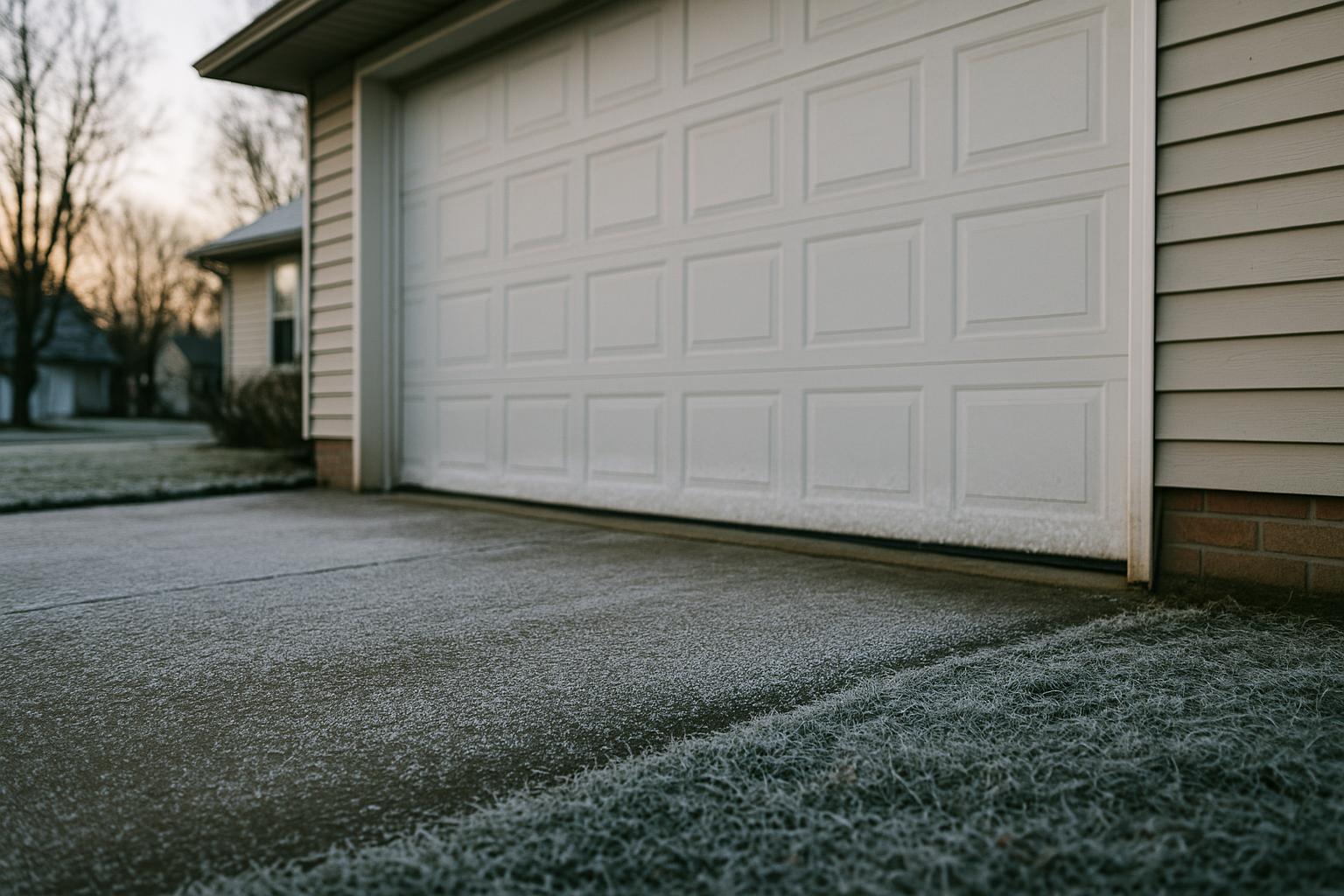
This is the number one culprit when a garage door refuses to budge on a cold morning. The rubber weatherstripping along the bottom of your door is designed to create a seal against drafts, rain, and pests. But when temperatures drop and moisture is present, that seal can freeze directly to your concrete driveway or garage floor.
When you press the opener button, the motor tries to lift the door, but the frozen seal holds it down. The opener may strain, make grinding noises, or trigger its safety reverse because it detects too much resistance.
What you can do: Never try to force the door open, as this can tear the weatherstripping or damage the opener. Instead, use a heat gun or hair dryer to gently warm the bottom seal. You can also carefully pour lukewarm (not boiling) water along the base to melt the ice. To prevent this from happening again, apply a silicone-based lubricant to the bottom seal before the next freeze.
2. Thickened or Hardened Lubricant
Your garage door relies on smooth movement across tracks, rollers, hinges, and springs. These components are typically lubricated to reduce friction and noise. But standard lubricants can thicken or even solidify in cold temperatures, making the door feel sluggish or causing it to stick partway through its travel.
What you can do: Switch to a lithium-based or silicone-based garage door lubricant, which performs much better in cold weather than general-purpose grease. Apply it to the rollers, hinges, tracks, and spring coils. This simple maintenance step can make a dramatic difference in how your door operates during winter.
3. Contracting Metal Components
Metal contracts when it gets cold. This basic principle of physics affects your garage door's tracks, springs, and hardware. When metal tracks contract even slightly, they can pinch or bind the rollers. Springs lose some of their tension, which means the opener has to work harder to lift the door.
If your springs were already nearing the end of their lifespan, cold weather can push them past their limit. A spring that breaks on a freezing morning is not uncommon, and it's a repair that should always be handled by a professional due to the extreme tension involved.
4. Opener Motor Struggles
Garage door openers are electromechanical devices, and cold temperatures can affect their performance. Older openers with lower horsepower ratings may not generate enough force to overcome the added resistance from cold-stiffened components. The motor may hum without moving the door, or it may trip its internal overload protection and shut off.
What you can do: Check your opener's force adjustment settings. Most openers have a dial or screw that controls how much force the motor applies. Increasing it slightly during winter can help, but be cautious. Setting the force too high can override important safety features. If your opener is more than 10 to 15 years old and consistently struggles in cold weather, it may be time to consider upgrading to a newer, more powerful model.
5. Misaligned or Damaged Tracks
Temperature swings cause your garage and its components to expand and contract repeatedly. Over time, this can cause track brackets to loosen or the tracks themselves to shift out of alignment. A misaligned track creates friction points that make the door harder to open, and cold weather amplifies the problem.
What you can do: Visually inspect your tracks for gaps between the track and the brackets, or look for areas where the track appears bent or warped. You can tighten loose brackets yourself, but if the track is bent or significantly misaligned, it's best to call a technician to avoid making the problem worse.
Preventive Steps to Winter-Proof Your Garage Door
The best way to avoid getting stuck on a cold Knightdale morning is to prepare your garage door before winter arrives. Here's a quick checklist:
- Lubricate all moving parts with a cold-weather-rated silicone or lithium spray.
- Inspect and replace worn weatherstripping before it becomes a freezing hazard.
- Apply silicone spray to the bottom seal to prevent it from bonding to the floor.
- Test the balance of your door by disconnecting the opener and lifting the door manually. It should lift smoothly and stay open about three to four feet off the ground. If it doesn't, your springs may need adjustment.
- Schedule a professional maintenance visit in the fall to catch small issues before they become winter emergencies.
When to Call a Professional
Some cold-weather garage door problems are easy DIY fixes. Others are not. You should call a professional if:
- A spring has visibly broken or you hear a loud bang from the garage.
- The door is off its tracks or hanging at an angle.
- The opener motor runs but the door doesn't move at all.
- You've tried basic troubleshooting and the door still won't open or close properly.
- You smell burning or notice the motor is overheating.
At Knightdale Garage Door, we offer emergency service for situations where you're stuck and can't wait. We understand that a garage door that won't open on a cold morning isn't just an inconvenience — it can throw off your entire day. Our technicians serve homeowners across Knightdale, Raleigh, Wendell, Zebulon, Garner, and Clayton, and we make it a priority to respond quickly when the weather turns harsh.
Don't Let Winter Catch You Off Guard
Cold weather garage door problems are frustrating, but most of them are preventable with a little preparation. Take 30 minutes on a mild fall weekend to lubricate your door's components, check the weatherstripping, and test the balance. That small investment of time can save you from a stressful morning and an emergency repair bill.
If your garage door is already giving you trouble this winter, or if you'd like to schedule a maintenance visit to get ahead of the cold, give us a call. We're here to help keep your garage door running smoothly all year long.