
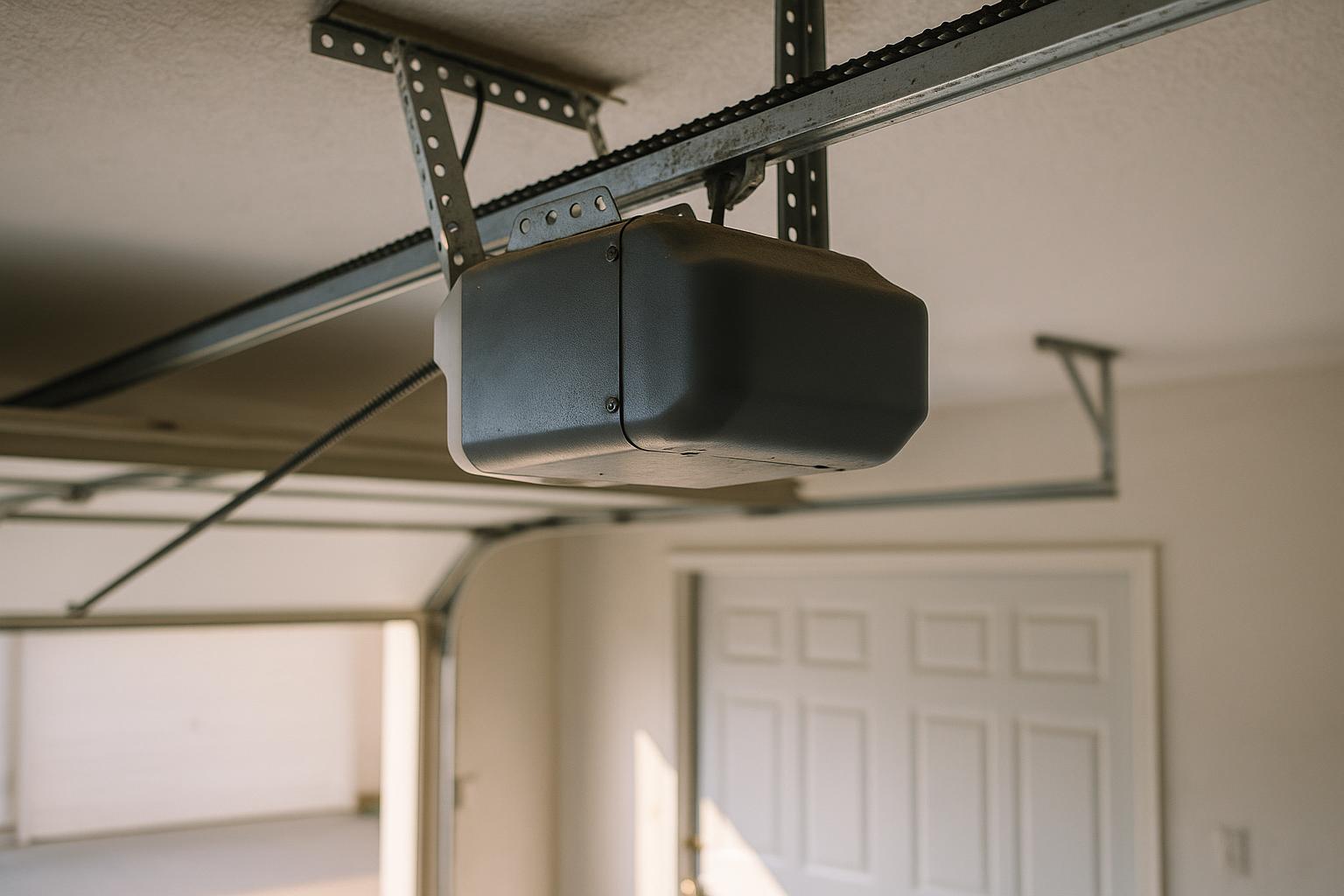
Your Garage Door Opener Won't Last Forever
Your garage door opener is one of those things you don't think about until it stops working. You press the button, the door goes up, you pull into the driveway, and life goes on. But like any mechanical device, garage door openers wear out over time. The good news is they usually give you plenty of warning before they fail completely.
If you're a homeowner in Knightdale or the surrounding area, knowing what to watch for can save you from getting stuck outside your garage on a cold morning or coming home to find your door won't budge. Here are the most common signs that your garage door opener is on its way out — and what you should do about each one.
1. The Opener Makes Unusual or Excessive Noise
All garage door openers make some noise, but there's a difference between normal operation and something that sounds like it's struggling. If your opener has started grinding, squealing, rattling, or making a strained humming sound, something is likely wearing out internally.
Chain-drive openers tend to be louder than belt-drive models by nature, but even a chain-drive shouldn't sound like metal scraping against metal. Increased noise can point to worn gears, a failing motor, or loose hardware inside the opener unit.
What to do:
- First, check that the chain or belt tension is correct and that mounting hardware is tight.
- If the noise persists, have a technician inspect the internal gears and motor. Gear replacement is a common and affordable repair that can extend the life of your opener by several years.
2. The Door Moves Slowly or Hesitates
When you press your remote or wall button, the door should begin moving within a second or two and travel at a consistent speed. If there's a long delay before the motor engages, or if the door moves noticeably slower than it used to, the opener's motor may be losing power.
This is especially common in older openers that have been in service for 15 years or more. The motor capacitor can weaken over time, reducing the unit's ability to lift the door efficiently.
What to do:
- Rule out other causes first — a door that's hard to move manually may have a spring or track issue rather than an opener problem.
- If the door moves freely by hand but the opener struggles, the motor or capacitor likely needs attention.
3. The Opener Runs But the Door Doesn't Move
You hear the motor running, but the door stays put. This is one of the most common opener failures, and it's usually caused by stripped gears inside the unit. The motor spins, but the worn gears can no longer transfer that motion to the drive mechanism.
In some cases, the problem is a broken drive gear or sprocket, which is a part that takes a lot of stress every time the door cycles. This is a repair that many Knightdale homeowners encounter after years of daily use.
What to do:
- Do not keep pressing the button repeatedly — this can cause further damage or overheat the motor.
- Call a garage door professional to inspect and replace the stripped gears. This is typically a straightforward repair.
4. The Remote or Wall Button Is Unresponsive
If your remote stops working, the first thing to check is the battery. That solves the problem more often than you'd think. But if you've replaced the battery and the remote still doesn't work — or if the wall-mounted button is also unresponsive — the issue may be with the opener's logic board or receiver.
Power surges, lightning strikes, and general electrical wear can damage the circuit board inside your opener. This is a relatively common issue in areas like Knightdale and Raleigh where summer storms can cause power fluctuations.
What to do:
- Replace the remote battery and try reprogramming the remote to the opener.
- Test the wall button. If neither the remote nor the wall button works, the logic board may need to be replaced.
- If the opener has power (the light comes on) but won't respond to commands, a technician can diagnose whether it's the board or another electrical component.
5. The Door Reverses for No Apparent Reason
While we've covered the topic of doors reversing before hitting the floor in a previous post, random reversals during the opening cycle or at various points during travel can indicate a different problem — specifically, an issue with the opener's internal limit settings or a failing control board.
If the opener seems confused about where the door should stop, or if it reverses direction mid-travel without any obstruction, the opener's electronics may be malfunctioning.
What to do:
- Check that nothing is blocking the safety sensors at the bottom of the door tracks.
- If the sensors are clean and aligned, the opener's limit and force settings may need adjustment, or the control board may need replacement.
6. The Opener Is More Than 15-20 Years Old
Modern garage door openers are more reliable, quieter, and safer than models made even a decade ago. If your opener is approaching the 20-year mark, it may lack important safety features that are now standard, such as rolling code technology, battery backup, and auto-reverse sensors.
Older openers also tend to use more energy and produce more noise. Upgrading to a new belt-drive or wall-mount opener can make a noticeable difference in your daily routine — and in your home's security.
What to do:
- If your opener is old and starting to show any of the symptoms above, it's usually more cost-effective to replace it rather than continuing to repair aging components.
- A new opener installation typically takes a couple of hours and immediately improves performance and safety.
When to Repair vs. When to Replace
Not every opener problem means you need a brand-new unit. Here's a general rule of thumb:
- Repair if the opener is under 10 years old and the issue is a single component like a gear, capacitor, or logic board.
- Replace if the opener is over 15 years old, requires frequent repairs, or lacks modern safety features.
- Replace if the cost of repair approaches 50% or more of the cost of a new unit.
A qualified technician can help you weigh the options based on your specific situation and budget.
Get Your Opener Inspected by a Local Pro
If your garage door opener is showing any of these warning signs, don't wait until it fails completely. A small issue today can turn into a bigger — and more expensive — problem tomorrow. At Knightdale Garage Door, we diagnose and repair all major opener brands, and we can help you choose the right replacement if it's time for an upgrade.
We serve homeowners throughout Knightdale, Raleigh, Wendell, Zebulon, Garner, and Clayton. Give us a call to schedule an inspection, and we'll make sure your garage door opener is working safely and reliably.