
Your Garage Door Shouldn't Sound Like That
You press the button, and instead of a smooth, quiet operation, your garage door groans, squeals, or rattles its way up the track. If this sounds familiar, you're not alone. Noisy garage doors are one of the most common complaints we hear from homeowners in Knightdale, and while some sounds are harmless, others are your door's way of telling you something is wrong.
The good news is that most garage door noises have identifiable causes, and many can be resolved before they turn into expensive repairs. Let's break down the most common sounds, what they mean, and what you should do about each one.
Grinding or Scraping Sounds
A grinding or scraping noise is one of the more concerning sounds your garage door can make. This typically means metal is rubbing against metal somewhere in the system, and it usually points to one of these issues:
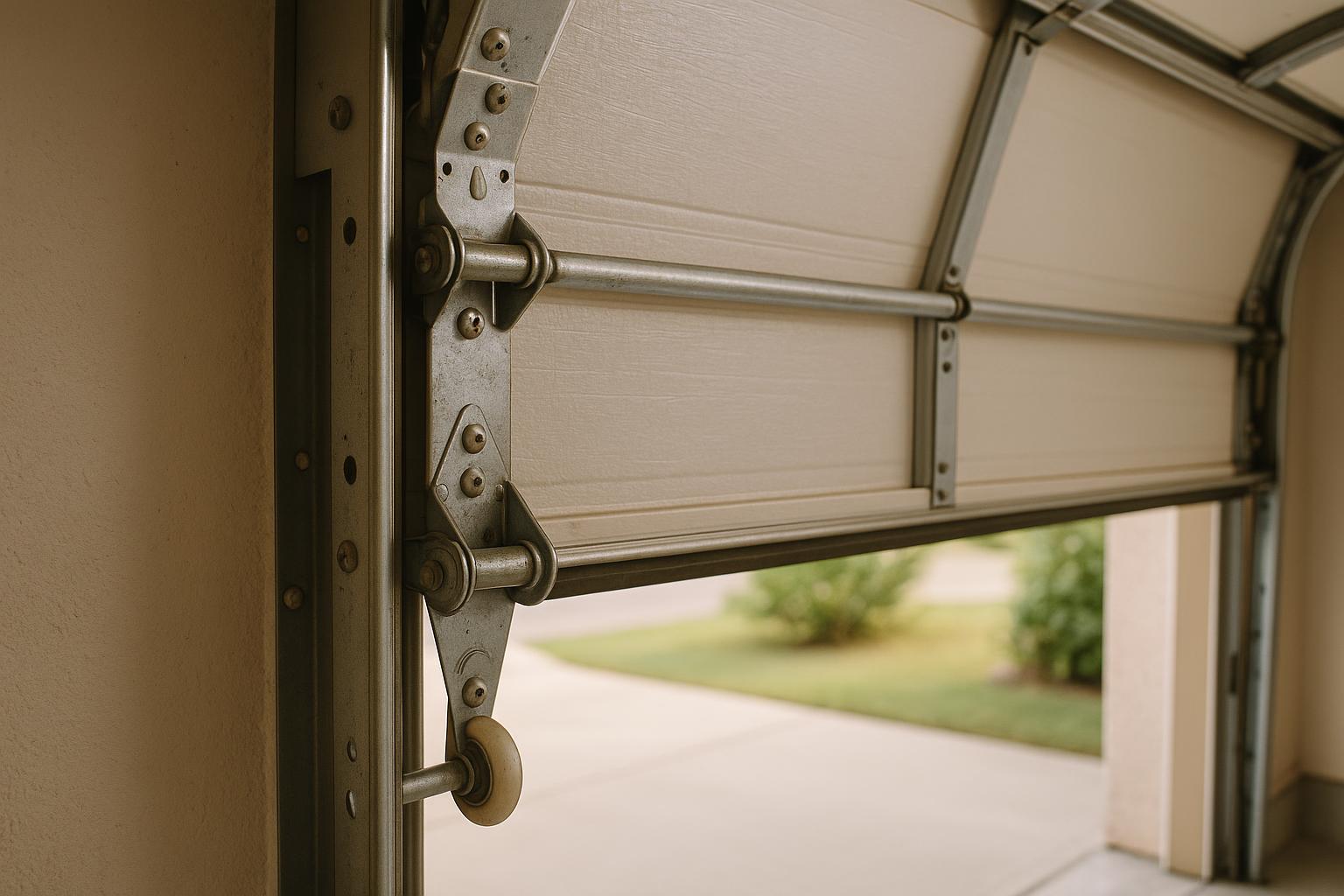
- Worn rollers: Steel rollers wear down over time and can start grinding against the track. If your rollers are original to the door and more than five to seven years old, they're likely the culprit.
- Misaligned tracks: If the vertical or horizontal tracks have shifted even slightly, the door can scrape against them as it moves. This puts extra stress on the entire system and can lead to the door getting stuck.
- Opener gear issues: A grinding sound coming specifically from the motor unit often indicates stripped gears inside the opener. This is especially common in older chain-drive openers.
If you hear grinding, it's best not to ignore it. Continued operation can cause further damage to the tracks, rollers, or opener mechanism, turning a minor repair into a major one.
Squealing or Squeaking Sounds
A high-pitched squeal every time your garage door moves is hard to ignore — and your neighbors in Knightdale probably aren't thrilled about it either. Squealing usually comes down to friction and lubrication issues:
- Dry hinges and rollers: The moving parts of your garage door need periodic lubrication. Without it, metal-on-metal contact creates that unmistakable squeal.
- Worn bearings: The bearings in your rollers and torsion spring system can dry out or deteriorate, producing a persistent squeaking sound.
- Tension issues with springs: Sometimes a squeal during operation indicates that your torsion springs are under uneven tension, which can affect how the door moves along the tracks.
In many cases, a proper lubrication service can eliminate squealing entirely. We recommend using a silicone-based or lithium-based garage door lubricant on all moving parts — hinges, rollers, springs, and bearing plates — every six months. Avoid using WD-40 as a long-term lubricant, as it's primarily a solvent and doesn't provide lasting protection.
Rattling or Vibrating Sounds
A rattling garage door often sounds worse than it actually is, but that doesn't mean you should ignore it. Common causes include:
- Loose hardware: Over thousands of open-and-close cycles, nuts, bolts, and screws naturally loosen. The vibration of the door amplifies the sound of any loose component.
- Loose chain or belt: If you have a chain-drive opener, a loose chain will slap against the rail and create a rattling noise. Belt-drive openers can also develop slack over time.
- Unsecured opener mounting: If the bracket that attaches your opener to the ceiling has loosened, the entire unit can vibrate during operation, creating a noticeable rattle throughout your garage.
A quick fix for rattling is to go through and tighten all visible hardware with a socket wrench. Check the bolts on the hinges, the brackets that hold the track to the wall, and the fasteners on the opener rail. If the rattling persists after tightening everything, there may be a deeper mechanical issue worth having a technician evaluate.
Banging or Popping Sounds
A loud bang or pop during operation is the noise that tends to alarm homeowners the most — and for good reason. These sounds can indicate:
- Spring issues: A loud bang, especially if the door suddenly becomes very heavy or won't open, often means a torsion spring has broken. This is a serious issue that requires immediate professional repair. Garage door springs are under extreme tension and should never be handled by someone without proper training and tools.
- Panel problems: Popping sounds can occur when a damaged or warped panel flexes during operation. Over time, this can worsen and compromise the structural integrity of the door.
- Track obstructions: Sometimes a popping noise happens when the rollers hit a dent or bend in the track, forcing them to jump slightly as they pass the obstruction.
If you hear a sudden, loud bang from your garage, stop using the door and call a professional. Attempting to operate a garage door with a broken spring or severely damaged component can be dangerous.
Humming Without Movement
If you press your garage door button and hear the motor hum but the door doesn't move, the opener is receiving power but can't drive the door. This usually means:
- The motor is running but the drive gear is stripped: The opener's internal gears have worn down to the point where they can no longer engage.
- The door is locked or obstructed: Check to make sure the manual lock isn't engaged and that nothing is blocking the door's path.
- A broken spring is making the door too heavy: Without functioning springs to counterbalance the weight, the opener motor simply can't lift the door on its own.
When to DIY and When to Call a Professional
Some garage door noise issues are safe and straightforward for homeowners to address on their own:
- Lubricating hinges, rollers, springs, and tracks
- Tightening loose bolts and screws
- Clearing debris from the tracks
However, certain repairs should always be left to a trained technician:
- Spring replacement or adjustment
- Track realignment
- Opener motor or gear repair
- Diagnosing complex mechanical issues
Working with garage door springs and high-tension components without the right equipment and experience can result in serious injury. If you're unsure about the source of a noise, it's always safer to have a professional take a look.
Keep Your Garage Door Running Quietly in Knightdale
A noisy garage door is more than just an annoyance — it's often an early warning sign that something needs attention. By identifying the type of sound and its likely cause, you can take action before a small issue becomes a costly repair.
At Knightdale Garage Door, we help homeowners across Knightdale, Raleigh, Wendell, Zebulon, Garner, and Clayton keep their garage doors operating smoothly and quietly. Whether you need a routine maintenance visit, a roller replacement, or an emergency spring repair, our team shows up on time and gets the job done right.
If your garage door has been making unusual noises, don't wait for it to stop working entirely. Give us a call and let us diagnose the problem before it gets worse.