
Your Garage Door Springs Are Doing More Work Than You Think
Every time you open or close your garage door, the springs are doing the heavy lifting — literally. A standard two-car garage door can weigh anywhere from 150 to 250 pounds, and without properly functioning springs, your opener alone couldn't move it. Springs counterbalance that weight, making the door feel almost weightless as it travels up and down the tracks.
But like any mechanical component under constant stress, garage door springs wear out over time. For homeowners in Knightdale and the surrounding areas, understanding the lifespan of your springs — and recognizing the warning signs of failure — can save you from an inconvenient breakdown or even a dangerous situation.
How Long Do Garage Door Springs Typically Last?
The lifespan of a garage door spring is measured in cycles. One cycle equals one full open and one full close of the door. Most standard torsion springs are rated for approximately 10,000 cycles, which translates to roughly 7 to 10 years of average use.
However, that estimate depends heavily on how often you use your garage door. Consider these scenarios:
- Average household (2-4 cycles per day): Springs may last 7-10 years.
- Busy household (6-8 cycles per day): Springs may last only 4-6 years.
- Home-based business or frequent use (10+ cycles per day): Springs could wear out in as little as 3 years.
High-cycle springs rated for 25,000 or even 50,000 cycles are available and can be a smart investment if you use your garage door frequently. At Knightdale Garage Door, we often recommend high-cycle springs to customers who want to avoid the hassle and cost of more frequent replacements.
Torsion Springs vs. Extension Springs: What's the Difference?
There are two main types of garage door springs, and knowing which type you have helps you understand what to expect:
Torsion Springs
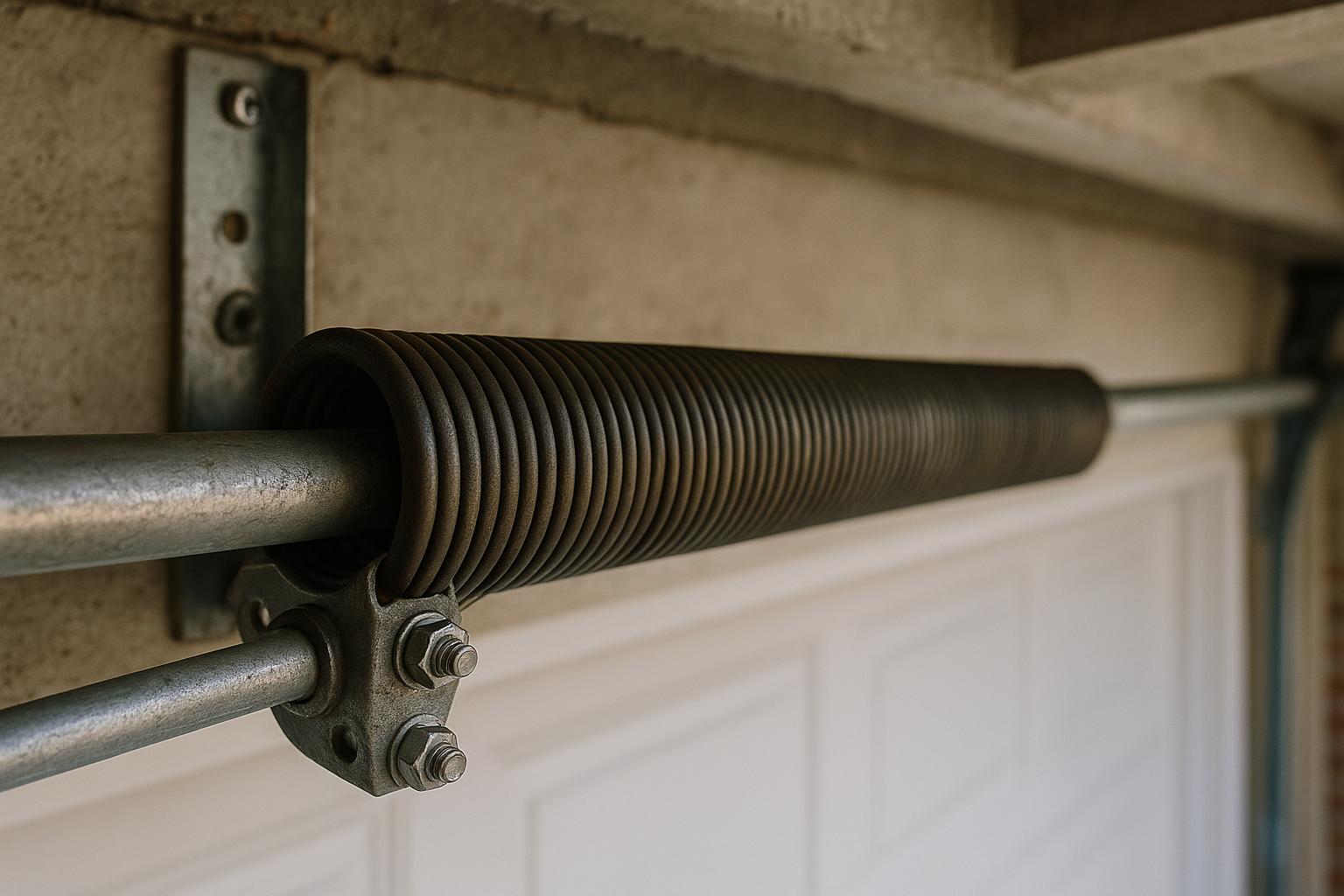
These are mounted horizontally above the garage door opening. They use torque to lift the door and are the more common type found in modern garage door systems. Torsion springs tend to last longer, operate more smoothly, and are generally considered safer than extension springs.
Extension Springs
These run along the horizontal tracks on either side of the door and stretch to store energy. Extension springs are typically found on older or lighter garage doors. They tend to wear out faster and can be more dangerous when they break because they're under significant tension and may not have safety cables installed.
If your home in Knightdale still has extension springs, it may be worth upgrading to a torsion spring system during your next replacement. The upfront cost is slightly higher, but the improved safety and longevity make it worthwhile.
Warning Signs Your Garage Door Springs Are Wearing Out
Springs rarely fail without warning. Here are the most common signs that your springs are nearing the end of their lifespan:
- The door feels heavier than usual: If your garage door seems harder to lift manually, the springs may be losing tension.
- The door opens unevenly: If one side rises faster than the other, one spring may be weaker or broken.
- Visible gaps in the spring coils: A torsion spring that's stretched or has visible gaps between coils is showing signs of fatigue.
- Loud bang from the garage: If you heard a loud sound like a firecracker coming from your garage, a spring likely snapped. This is one of the most common ways homeowners discover a broken spring.
- The opener struggles or won't open the door: Your opener is designed to move the door, not lift its full weight. If the springs aren't doing their job, the opener will strain, stall, or refuse to operate.
- The door slams shut quickly: Without proper spring tension, the door can come crashing down, which is a serious safety hazard.
Can You Replace Garage Door Springs Yourself?
This is one of the most common questions we get, and our answer is always the same: we strongly advise against DIY spring replacement.
Garage door springs are under extreme tension. A torsion spring on a standard residential door can hold hundreds of pounds of force. If improperly handled, a spring can release that energy violently, causing serious injury or even death. Emergency rooms across the country treat garage door spring injuries every year, and many of those injuries happen to homeowners attempting a DIY repair.
Professional technicians have the specialized tools, training, and experience to replace springs safely. The job typically takes less than an hour for a trained professional, and the peace of mind is well worth the service call.
What to Expect During a Professional Spring Replacement
When you call Knightdale Garage Door for a spring replacement, here's what the process typically looks like:
- Inspection: We assess the entire door system, not just the springs. This includes checking the cables, rollers, tracks, and opener to make sure everything is in good working order.
- Spring selection: We match the correct spring size and type to your specific door. Using the wrong spring can cause premature failure or damage to other components.
- Safe removal and installation: We carefully release the tension on the old springs and install the new ones using professional winding tools.
- Balancing and testing: After installation, we balance the door and test it through several cycles to ensure smooth, safe operation.
- Lubrication and maintenance tips: We lubricate the new springs and other moving parts, and we'll share tips to help you extend the life of your new springs.
How to Extend the Life of Your Garage Door Springs
While springs will eventually wear out no matter what, a little preventive maintenance can help you get the most out of them:
- Lubricate your springs twice a year: Use a silicone-based or white lithium grease spray on the springs to reduce friction and prevent rust. This is especially important here in North Carolina, where humidity can accelerate corrosion.
- Schedule annual maintenance: A yearly inspection from a professional can catch small problems before they become expensive repairs.
- Don't ignore unusual sounds: Squeaking, grinding, or popping noises are your door's way of telling you something needs attention.
- Keep the tracks clean: Debris in the tracks forces the springs and opener to work harder, shortening their lifespan.
- Consider high-cycle springs: If you're replacing springs, investing in high-cycle options can double or triple their lifespan.
Serving Knightdale and the Surrounding Communities
At Knightdale Garage Door, we provide fast, reliable spring replacement services throughout Knightdale, Raleigh, Wendell, Zebulon, Garner, and Clayton. Whether your spring just snapped this morning or you've noticed your door struggling over the past few weeks, we're here to help.
We show up on time, provide honest assessments, and use quality parts that are built to last. If you're unsure whether your springs need replacing, give us a call. We're happy to inspect your system and give you a straightforward recommendation — no pressure, no upselling.
Don't wait for a broken spring to leave you stuck. A little proactive attention today can prevent a major headache tomorrow.